
10K for Beginners: Your Complete Guide to Running Your First 10K

Thinking about running your first 10K? 10K for beginners doesn’t have to feel overwhelming. You don’t need to be an experienced runner to get there. With the right training, gradual progression, and a little patience, you can build the endurance to run 10 kilometres with confidence.
A 10K is a great milestone for anyone starting their running journey. It’s challenging enough to feel like a real achievement, but manageable when you break the distance into smaller, consistent steps.
At EnduranceHQ, we’re here to help you understand not just how far to run, but how to train smarter, recover properly, and build the mindset that keeps you moving when motivation disappears.
Is Running a 10K Realistic for Beginners?
Let’s be honest — 10 kilometres can sound intimidating when you’re starting out.
If you’re currently struggling to run for 10 or 15 minutes without stopping, seeing “10K” on a training plan can make you wonder whether you’ve bitten off more than you can chew.
Here’s the thing: you don’t have to be able to run 10K today to eventually run 10K.
Your body adapts to training gradually. The goal isn’t to go from a short jog to 10 kilometres overnight. It’s to give yourself enough time to improve your cardiovascular fitness, muscular endurance, running efficiency, and confidence.
Some beginners may reach 10K relatively quickly, while others will need several months. That’s completely fine.
Your starting point matters more than someone else’s pace.
If you’re ready to start, let’s look at how you can approach the distance without making the common mistake of doing too much too soon.
How to Approach 10K for Beginners
The biggest mistake a new runner can make is treating every training session like a test.
You don’t need to run your fastest kilometre every time you put on your shoes. Most of your training should feel controlled enough that you could speak in short sentences while running.
A good beginner approach focuses on four things:
- Consistency: Running regularly matters more than having one huge workout.
- Gradual progression: Increase your training slowly instead of chasing distance every day.
- Easy running: Comfortable runs help you build your aerobic base without constantly exhausting yourself.
- Recovery: Rest isn’t wasted training. It’s part of the process.
Think of your training as building a foundation. You wouldn’t try to build a house by putting the roof up first. Running works the same way.
Start With the Distance You Can Handle
If you can currently run 2–3 kilometres comfortably, don’t worry about jumping straight to 5K or 10K.
Start there.
For someone who isn’t able to run continuously yet, alternating periods of easy running and walking can also be a useful way to build fitness. Over time, the running portions can become longer as your endurance improves.
The objective is simple: make running feel sustainable.
Once your current distance starts feeling easier, you can gradually extend one of your weekly runs.
Building a 10K Training Plan for Beginners
A 10K training plan for beginners doesn’t need to be complicated.
In fact, making your plan unnecessarily complicated can make it harder to follow. What matters is having a sensible combination of running, easier days, and recovery.
For many beginners, three running days per week can be a practical starting point.
A simple week could look like this:
| Day | Training |
|---|---|
| Monday | Rest or light activity |
| Tuesday | Easy run |
| Wednesday | Rest |
| Thursday | Easy/steady run |
| Friday | Rest |
| Saturday | Longer easy run |
| Sunday | Rest or light recovery |
This is only an example, not a rigid schedule you have to follow.
Your current fitness, previous running experience, available time, and recovery ability should all influence your training.
Your Long Run Is Important
The weekly long run is where you’ll gradually become comfortable spending more time on your feet.
For example, if your current comfortable distance is around 3 kilometres, your longer run might initially be around that distance. As the weeks pass, you can gradually increase it.
You don’t need to reach 10K every week during training.
The purpose of the long run is to develop endurance, not to prove that you’ve already completed the goal.
And don’t be afraid to slow down.
Your long run should generally be easier than the pace you’d use when actually racing a 10K.
A Simple 10K Running Plan for Beginners
Wondering what progression might look like?
Here’s a 10K running plan for beginners that demonstrates the basic idea. Treat it as an example framework rather than a prescription — your starting fitness may require more or less time.
| Week | Longer Run | Focus |
|---|---|---|
| 1 | 3 km | Get comfortable running consistently |
| 2 | 4 km | Build time on your feet |
| 3 | 4 km | Maintain consistency |
| 4 | 5 km | Reach your first major milestone |
| 5 | 6 km | Gradually extend endurance |
| 6 | 7 km | Stay controlled and comfortable |
| 7 | 8 km | Build confidence with distance |
| 8 | 6 km | Easier week and recovery |
| 9 | 8 km | Return to longer running |
| 10 | 9 km | Get close to your goal |
| 11 | 6 km | Reduce fatigue and recover |
| 12 | 10 km | Complete your first 10K |
Again, this isn’t a one-size-fits-all schedule.
If you’re starting from very little running experience, you may need more weeks. If you’ve already built a decent running base, you may progress differently.
Don’t force the schedule just because the calendar says it’s time to increase the distance.
If something feels unusually difficult, repeat a week or take additional recovery time.
What Pace Should Beginners Run?
This is one of the most common questions — and one of the easiest places for beginners to go wrong.
You don’t need to worry about your 10K race pace when you’re just learning to run longer.
Instead, focus on effort.
An easy run should feel controlled. You shouldn’t finish every training session completely exhausted and wondering how you’re going to walk home.
A useful beginner rule is the talk test: if you can speak a few words or short sentences while running, you’re probably keeping the effort reasonably controlled.
Your pace will also change depending on weather, terrain, sleep, fatigue, and how you’re feeling that day.
So don’t compare every run with your previous personal best.
Some runs are meant to be slow. That’s not a failure — it’s training.
Strength Training and Recovery Matter Too

Running isn’t only about running.
Your body has to handle repeated impact and thousands of steps during longer sessions. Adding sensible strength work can help you become a more well-rounded athlete.
You don’t need a complicated bodybuilding programme.
Basic exercises such as:
- Squats
- Lunges
- Calf raises
- Glute bridges
- Planks
- Single-leg exercises
can complement your running.
Recovery is equally important.

Make sure your training includes rest days, adequate food, hydration, and enough sleep. If you’re constantly tired, your runs are getting worse, or you’re struggling to recover between sessions, that may be a sign that your training load needs adjusting.
And if you develop persistent or significant pain, don’t simply try to run through it. Getting appropriate professional advice is more sensible than turning a small problem into a long-term interruption.
Fueling Your First 10K
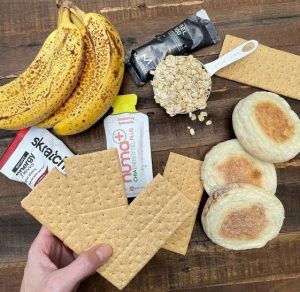
You don’t need a complicated nutrition strategy for every beginner training run.
For shorter, easy sessions, a normal balanced diet and adequate hydration may be enough.
As your runs become longer, however, nutrition becomes more important.
Prioritize:
- Carbohydrates for running energy
- Protein to support recovery
- Fruits and vegetables for overall nutrition
- Adequate fluids
- Regular meals rather than constantly relying on snacks
Before a longer run, choose foods you already know your stomach handles well. Your first 10K isn’t the time to experiment with a completely new meal or supplement.
And remember: nutrition should support your training, not become another source of stress.
The Mental Side of Running 10K

There’s a point during almost every challenging run where your brain starts asking a simple question:
“Why am I doing this?”
That’s normal.
Training for a 10K isn’t just about developing your lungs and legs. You’re also learning how to stay patient when progress feels slow.
Some days you’ll feel amazing. Other days, the same distance will feel strangely difficult.
Don’t judge your entire running journey based on one bad session.
Instead, look at the bigger picture:
Did you show up consistently?
Are you gradually becoming more comfortable with distance?
Are you recovering between sessions?
Those are much better indicators of progress than whether today’s run was 30 seconds faster than last week’s.
The finish line becomes much easier to reach when you stop trying to rush toward it.
Your First 10K: What Should You Expect?
Your first 10K doesn’t need to be a race against everyone around you.
For many beginners, the biggest achievement is simply completing the distance.
Start conservatively. Give yourself permission to slow down. If you need a short walking break, take one. You can always increase your effort later if you’re feeling strong.
A smart first 10K might feel almost too easy during the early kilometres.
That’s a good thing.
You want to reach the later kilometres with enough energy to keep moving rather than discovering at kilometre 4 that you started far too fast.
And when you finally reach 10 kilometres?
Enjoy it.
That number represents more than the distance. It represents all those ordinary training days when you decided to put your shoes on and go anyway.
Frequently Asked Questions
How long does it take a beginner to train for a 10K?
There’s no single timeline that works for everyone. Someone who already runs regularly may need only a few weeks, while someone completely new to running may need several months. Your starting fitness and ability to recover should determine your progression.
How many days a week should a beginner run?
Three running days per week can be a reasonable starting point for many beginners. This gives you opportunities to build consistency while still leaving recovery days between sessions.
Should I run 10K before my first 10K race?
Not necessarily. You can build toward the distance without repeatedly running the full 10 kilometres in training. In many cases, arriving at race day rested and confident is more useful than proving you can run the full distance every week.
Can I walk during my first 10K?
Absolutely. Walking isn’t a failure. If you’re new to endurance running, short walking breaks can help you manage fatigue and complete the distance. You can work toward running continuously as your fitness develops.
What if I can’t follow my training plan?
Don’t panic.
Training plans are frameworks, not contracts. Life happens — you might get busy, feel unusually tired, miss a run, or need extra recovery. Simply adjust and continue when you’re ready.
Your 10K Journey Starts With One Run
You don’t need to be a fast runner.
You don’t need expensive equipment.
And you definitely don’t need to feel completely ready before you begin.
You just need a sensible starting point and the patience to keep building from there.
A 10K can seem like a huge goal when you’re looking at the finish line from the beginning. Break it down into individual runs, individual kilometres, and individual training days — suddenly, the goal feels much more manageable.
Start where you are. Train consistently. Recover properly. And let the kilometres take care of themselves.
Explore more running guidance on EnduranceHQ with our , and keep building your endurance one run at a time.
Ready to start your 10K journey? Lace up, step outside, and make your first kilometre count.