

Your first 5K doesn’t need to be fast. It needs to be smart. Here’s what beginner runners should know before they start chasing the finish line.
If you’re looking for advice on 5K for beginners, your first race can feel surprisingly intimidating. You might be wondering how far you should run, whether you need to train every day, what pace you should hold, or whether everyone else will be much faster than you.
Relax. You don’t need to be an experienced runner to complete a 5K.
In fact, 10 Things Every Beginner Runner Should Know Before Their First 5K comes down to a few simple principles: start slower than you think, build gradually, recover properly, and don’t measure your progress only by your finishing time.
Whether you’re starting from the couch, returning to running after a long break, or already able to run a couple of kilometres, these principles can make your first 5K much more enjoyable.
Let’s get into it.
Why Your First 5K Can Feel Harder Than Expected
Five kilometres doesn’t sound like a huge distance.
Then you actually try to run it.
The first kilometre might feel fantastic. You’re excited, your adrenaline is high, and you’re probably running faster than planned. By kilometre three, though, your breathing gets heavier. Your legs start feeling tired. Suddenly, that finish line seems a lot farther away.
Sound familiar?
One of the biggest mistakes beginners make is treating every run like a test. They try to run as fast as possible because they think that’s what “running” means.
It isn’t.
Your first goal should be to teach your body how to handle running consistently. Speed can come later.
And here’s the interesting part: sometimes, running slower is exactly what helps you eventually run faster.
Ready to build your base? Let’s look at the things that actually matter.
10 Things Every Beginner Runner Should Know Before Their First 5K
1. You Don’t Have to Run Fast to Become a Better Runner

This is probably the most important lesson.
When you’re new to running, it’s tempting to chase pace every time you put on your shoes. You see someone running at 5:00/km and think, “I should be able to do that too.”
Don’t.
A large portion of your training should feel controlled and conversational. You should generally be able to speak a few sentences without completely running out of breath.
Why?
Easy running allows you to accumulate distance without constantly exhausting yourself. Over time, your cardiovascular system, muscles, tendons and running economy adapt.
So if your comfortable pace is 7:00/km, 7:30/km or even slower, that’s completely fine.
The goal isn’t to impress your watch. The goal is to become a runner.
2. Your First 5K Isn’t a Race Against Everyone Else

Your first 5K is personal.
Someone might finish in 22 minutes. Someone else might take 40 minutes. Another runner may alternate between running and walking.
All three people completed 5K.
That’s worth remembering.
If you’re starting your running journey, don’t let somebody else’s pace turn your achievement into a disappointment.
Your first 5K gives you a starting point. Once you have that starting point, you can work on improving it.
And that’s where running becomes really fun.
You can look back several months later and realise:
“I used to struggle to run 2 kilometres. Now I’m running 5K comfortably.”
That’s progress.
3. Recovery Is Part of Training

Here’s something beginners often learn the hard way:
Running doesn’t make you fitter by itself. Recovering from running allows your body to adapt to it.
If you run hard every single day, you might initially feel like you’re working extremely hard toward your goal.
But your body needs time to repair and adapt.
Recovery includes:
- Getting enough sleep
- Taking easy or rest days
- Eating enough to support training
- Staying hydrated
- Managing overall training load
- Paying attention to persistent aches and unusual pain
You don’t need to “earn” your rest day.
Rest is training too.
4. Increase Distance Gradually
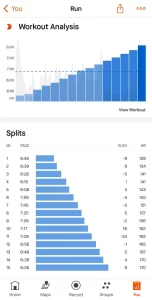
If you can currently run 2 kilometres, don’t suddenly decide that tomorrow you’re going to run 8.
Your cardiovascular system might feel capable of doing it, but your muscles, tendons and joints may not be ready for that sudden increase in workload.
Build gradually.
For example, you might start with short, comfortable runs and increase your total weekly running over several weeks rather than trying to make one huge jump.
And remember that progress isn’t always linear.
One week might feel amazing. The next might feel strangely difficult.
That’s normal.
Consistency beats heroic workouts.
5. You Don’t Need to Train Every Day

More isn’t automatically better.
A beginner can make excellent progress while running only a few days per week.
Your exact schedule will depend on your current fitness, other activities and recovery, but something as simple as three running sessions per week can provide a solid foundation.
For example:
Monday: Easy run
Wednesday: Easy or slightly faster session
Saturday: Longer, comfortable run
The remaining days can be used for recovery, strength training, walking or other activities.
The important thing is that your running schedule should be something you can actually maintain.
A perfect two-week plan followed by three weeks of exhaustion isn’t better than a simple plan you can follow for months.
6. Strength Training Can Help Your Running

Running isn’t only about your lungs.
Your legs need to repeatedly absorb and produce force every time your foot hits the ground.
Strength training can complement your running by helping you develop stronger muscles and better overall physical capacity.
You don’t need a complicated bodybuilding program either.
Beginner-friendly movements can include:
- Squats
- Lunges
- Calf raises
- Glute bridges
- Step-ups
- Core exercises
Even two sensible strength sessions per week can complement a beginner running routine.
Think of it this way: running is the skill you’re practising, while strength training helps build the physical foundation underneath it.
7. Don’t Ignore Your Running Form — But Don’t Obsess Over It Either
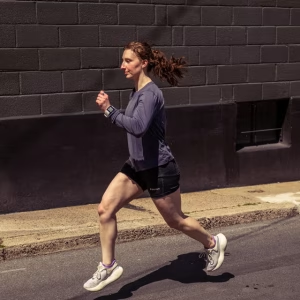
You’ve probably seen running videos telling you that there’s one “perfect” way to run.
Things get complicated quickly.
For beginners, you don’t need to constantly think about every movement of your arms, feet, hips and knees.
Instead, focus on running in a relaxed manner.
Keep your shoulders reasonably relaxed, avoid excessive tension in your hands, and allow your arms to move naturally. Try to maintain a comfortable rhythm rather than forcing yourself into an artificial technique.
And don’t suddenly change your entire running style because you watched a 30-second video online.
Your body needs time to adapt.
8. If You Want to Run a Faster 5K, Don’t Run Every Training Session at 5K Pace

This is where many new runners get stuck.
They want to run a faster 5K, so they attempt to run every training run at their target 5K pace.
It sounds logical.
It usually isn’t.
Your training should have different intensities. Easy running builds your aerobic base, while carefully planned faster sessions can help develop speed and running efficiency.
Eventually, you may incorporate workouts such as:
- Short intervals
- Tempo or threshold running
- Hill repeats
- Progression runs
- Longer easy runs
But don’t rush into advanced workouts simply because you want a faster time.
First build the engine. Then learn how to push it.
9. A 30-Minute 5K Is a Goal — Not a Beginner Requirement

If you’ve searched for tips for running a 5K in 30 minutes, you’ve probably noticed how often the 30-minute mark appears.
That’s because running 5K in 30 minutes means maintaining an average pace of approximately 6:00 per kilometre.
It’s a great goal.
But it isn’t a requirement for being a “real” runner.
For one person, 30 minutes might be their first major milestone. For another, it might take months or years. Someone else might never care about that particular time — and that’s completely okay.
If you eventually want to break 30 minutes, build toward it progressively.
Start by being able to complete 5K comfortably. Then improve your endurance. Then introduce appropriate speed work.
A fast 5K is built on a strong aerobic foundation.
10. Your First 5K Should Teach You What to Do Next

Crossing the finish line is not the end.
It’s your first piece of data.
After your first 5K, ask yourself:
- How did my breathing feel?
- Did I start too quickly?
- Did I struggle in the final kilometre?
- How did my legs feel afterward?
- Did I recover quickly?
- Did I actually enjoy the experience?
- What would I change next time?
Maybe you discover that endurance is your biggest weakness.
Maybe you have decent endurance but need more speed.
Maybe your pacing needs work.
Or perhaps you realise that you simply love running.
That’s the real value of your first 5K.
It gives you somewhere to start.
How to Prepare for a 5K for Beginners
If you’re wondering how to prepare for a 5K run in 1 month, the answer isn’t to cram as much running as possible into four weeks.
A month is enough time for a beginner to make meaningful progress, but your starting point matters.
If you’re already able to run 2–3 kilometres comfortably, your approach can be very different from someone who currently struggles to run for five minutes.
If you’re starting from very little running experience, a structured program such as NHS Couch to 5K can help you build your running gradually.
A simple four-week structure could look something like this:
Week 1 — Build the Routine
Focus on getting used to running consistently.
Keep most sessions easy and comfortable. Don’t worry about speed.
Week 2 — Add a Little More Distance
Gradually increase one of your runs while keeping the intensity under control.
You’re building endurance, not trying to prove your fitness.
Week 3 — Introduce Controlled Faster Running
If your body is responding well, you can introduce a small amount of faster running, such as short intervals or a controlled tempo effort.
The majority of your training should still remain comfortable.
Week 4 — Reduce the Workload
Don’t try to become dramatically fitter during race week.
Allow your body to absorb the training. Keep some easy running, reduce unnecessary fatigue and arrive at your 5K feeling fresh.
And if you’re not ready to run the entire distance continuously after four weeks, that’s okay too.
A run-walk strategy is still a legitimate way to complete a 5K.
Tips for Running a 5K for Beginners on Race Day
Race day feels different from a normal training run.
There are crowds. Music. Other runners. People sprinting past you in the first kilometre.
Don’t let the excitement dictate your pace.
Before the start
Arrive with enough time to avoid unnecessary rushing. Wear shoes and clothing you’ve already tested during training.
Don’t experiment with completely new gear on race morning.
During the first kilometre
Hold back.
Seriously.
The first kilometre should probably feel easier than you expect. If you’re already gasping for air early in the race, you’ve likely started too aggressively.
Around the halfway point
Check in with yourself.
Are you controlled? Can you maintain your pace? If yes, keep going.
The final kilometre
Now you can start thinking about pushing.
If you still have energy, gradually increase your effort.
That final stretch is where you get to find out what you’ve got.
What Beginners Can Expect From Their First 5K
Training for a 5K isn’t only about getting a number on Strava.
You’ll likely notice changes that have nothing to do with your finishing time.
With consistent training, you can develop:
- Better cardiovascular fitness
- Greater running confidence
- Improved pacing awareness
- Stronger legs
- Better exercise habits
- Greater mental resilience
- A foundation for longer distances
And perhaps the biggest benefit?
A 5K can become your gateway to everything else.
5K → 10K → Half Marathon → Marathon → Ultra.
You don’t need to decide how far you’re going to go today.
Just take the next step.
Frequently Asked Questions
Is 5K good for a beginner runner?
Absolutely. A 5K is a popular starting goal because it’s challenging enough to feel meaningful without requiring the enormous training commitment of a marathon or ultramarathon.
The important thing is to adjust your training to your current fitness level.
How long does it take a beginner to run 5K?
There’s no universal answer. Some beginners can complete 5K within a few weeks, while others need several months to comfortably run the distance.
Your starting fitness, training consistency, recovery and previous exercise experience all matter.
How often should a beginner run?
For many beginners, three running sessions per week can provide a good starting point. You should also allow enough recovery between harder sessions.
If you’re completely new to exercise, start conservatively and build gradually.
What is a good 5K time for a beginner?
There’s no single “good” time.
Finishing your first 5K is an achievement regardless of whether it takes 25 minutes, 35 minutes, 45 minutes or longer.
Once you’ve established a baseline, you can set a more specific personal goal.
Can I prepare for a 5K in 30 days?
Yes, depending on your starting fitness.
If you’re already active or can comfortably run a few kilometres, 30 days can be enough to make noticeable progress. If you’re starting from very little running experience, your priority should be completing the distance safely and comfortably rather than forcing a specific finishing time.
Your First 5K Is Just the Beginning
There’s something special about your first 5K.
You might remember the first time you ran 1 kilometre without stopping. You might remember checking your watch every few hundred metres. You might remember how long that final kilometre felt.
And eventually, you’ll probably look back at it and realise how far you’ve come.
That’s why we built EnduranceHQ.
We’re interested in the entire journey — from your first 5K to your first 10K, half marathon, marathon and potentially even an ultramarathon. Along the way, we’ll cover training, running mindset, recovery and endurance events so you can train smarter rather than simply training harder.
If you’re ready to take your running seriously, explore our Training resources, or continue exploring EnduranceHQ for more practical running guides.
Your first 5K doesn’t have to be perfect. It just has to be your first step.
Run farther. Train smarter.